

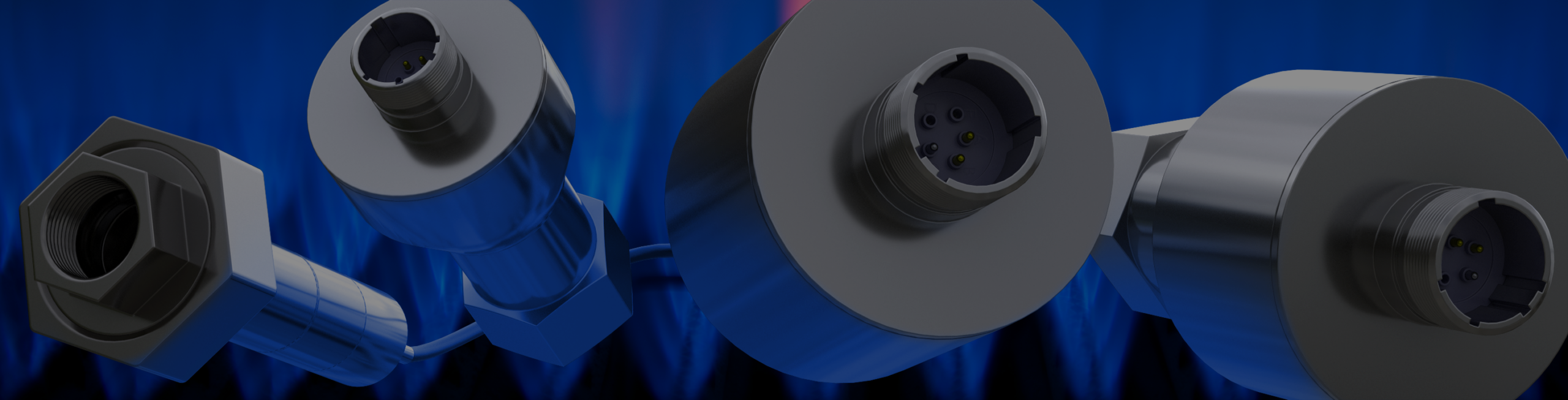
Gas turbines use one of two flame sensors from Reuter-Stokes— the Flame Tracker or the Flame Tracker Dry 325 (FTD 325). In use for many years, the Flame Tracker employs a water-cooling system to keep the sensor temperature below 150° C. Conversely, the FTD 325 uses innovative remote electronics technology to eliminate the need for water cooling on both the hot and cool end of the sensor.
Built on the proven Silicon Carbide sensing element used in the Flame Tracker, the FTD 325 system takes advantage of a remote electronics configuration that places a sensing element capable of operation at temperatures up to 325°C in the hot end of the sensor and moves the temperature-sensitive electronics to a low spot in the turbine compartment where temperatures are below its 150° C operational limits. The electrical signal from the hot end is transmitted to the cool end via a 30-foot long mineral insulated cable.
Water cooling concerns
The use of a water-cooling system introduces risk associated with high impact water leaks as well as the more commonplace damage to Flame Trackers due to overheating caused by cooling system failures.
High Impact water leaks
Located over the compressor casing’s combustion chambers, the Flame Tracker’s water-cooling lines occasionally develop a leak as a result of loose fittings or vibration-related damage. When the leaking water sprays over the compressor casing, the casing cools and shrinks causing the compressor rotor blades to rub against the inside of the casing. Eventually the blades are damaged, and in the most severe cases liberated blades cause cascading damage to additional compressor components (known as “corn cobbing”).
Even when the leaking water does not lead to compressor blade damage, it can still create a fire hazard. When cooling water mixed with antifreeze— such as ethylene glycol or propylene glycol— contacts the hot turbine casing, residual
glycol can combust on the casing as the water boils away.
Overheating failures
While the maximum operating temperature for the Flame Tracker is 150° C, the ambient air around the sensor can reach temperatures as high as 280° C. This means that when the water-cooling system fails, the Flame Tracker can quickly overheat and incur damage.
A variety of different failure modes—from water lines blocked due to hard water deposits, biological growth, silt, corrosion, and freezing, to the occasional forgetful operator who fails to turn on the cooling water valves after an outage— can inhibit sufficient water cooling, leading to Flame Tracker malfunction and often permanent damage.
FTD 325 advantages
The FTD 325 achieves greater flame sensor reliability and delivers operational benefits for gas turbines. The FTD 325’s elimination of a water-cooling system translates to:
- No high impact water leaks
- Significantly reduced maintenance due to overheated sensors
- Enhanced availability/reliability
- Simplified outage maintenance
Enhanced availability and reliability
The safety integrity levels of the electronic sensors for both the Flame Tracker and FTD 325 were analyzed using reliability models—the standard approach used to develop safety manuals and establish safety integrity levels (SIL). Results predicted a mean time to failure (MTTF) of 130,000 hours for the FTD 325, a value four times the required design life of the product. An analysis of Flame Tracker reliability found that 77% of all of its failures were due to overheating resulting from water-cooling system failures. Because the FTD 325 eliminates these failures, its reliability is better than that of the Flame Tracker units.
Simplified outage maintenance
By eliminating water-cooling lines and associated electrical conduits running throughout the turbine, the FTD 325 offers significantly simplified outage maintenance. Its mineral insulated cables easily can be removed from the strut channel supports and the hot end half of the sensor can be rolled up and hung out of the way. Re-assembly at the end of an outage is similarly less time consuming for the FTD 325 than for the Flame Tracker. Outages are simplified and labor hours are reduced by using the non-water-cooled sensor.
Conclusion
While high impact water leaks associated with the Flame Tracker are infrequent, they can create a great deal of expense associated with the extensive repairs and potential multiple-week disruption when the turbine is out of service. Additionally, Flame Tracker sensor overheating can be costly in terms of parts and labor replacement requirements as well as the occasional additional expense of a related turbine trip. These reasons, along with the enhanced availability, reliability, and simplified outage maintenance associated with the FTD 325, have led Baker Hughes to recommend the use of the non-water-cooled flame sensor as a cost-effective solution to help achieve overall gas turbine performance improvement.