

News
•
May 15, 2025
•
7 min read

Baker Hughes Launches Advanced Flame Detection Technology

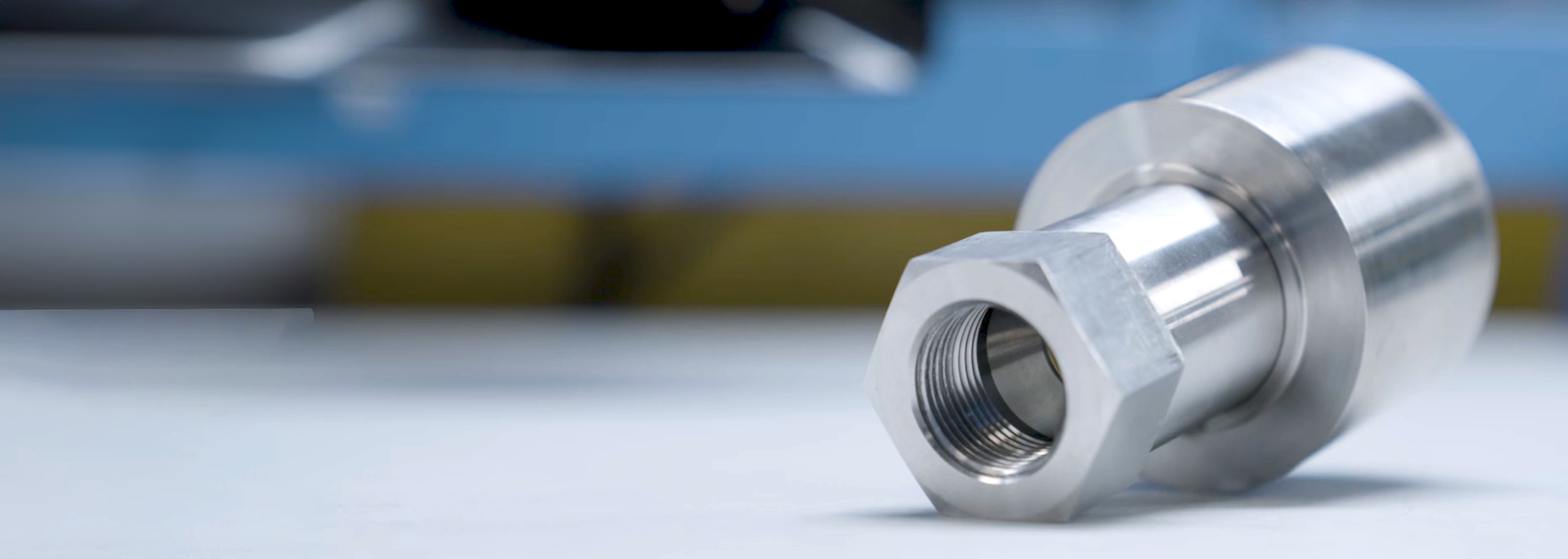
Part of Baker Hughes’ Reuter-Stokes product line portfolio, the Flame Tracker Increased Low Gain (ILG) features enhanced light sensitivity to improve flame detection accuracy and reliability on gas turbines and turbines using hydrogen blends.

Marcus Chen, PhD

Principal Application Engineer · Downhole
RS-N7 compensated neutron logging tool, prepared for downhole deployment in a Permian Basin operator's lab.

TWINSBURG, OHIO, (U.S.) – 15 May, 2025 – Baker Hughes, an energy technology company, announced Thursday the launch of an advanced flame detection technology, Flame Tracker Increased Low Gain (ILG), designed to enhance flame sensing capabilities on gas turbines.

Flame sensors are crucial safety devices in gas turbines that detect the presence of a flame in the combustor section. They provide early warnings if the flame is lost or unstable, triggering a shutdown sequence to prevent turbine damage and minimize hazards including explosions from unburned fuel buildup. However, the performance of a flame sensor is dependent on its ability to sense light.

Part of Baker Hughes’ Reuter-Stokes product line portfolio, the Flame Tracker ILG solution features innovative electronics that enhance sensitivity to lower light thresholds, making it significantly more responsive than its standard Flame Tracker. This increased sensitivity ensures accurate “flame on” signals, even in applications with obscured sight tubes, condensation, fouled lenses, and other conditions that may impact light reaching the sensor. 

As fuel flexibility becomes increasingly important in balancing secure energy supply with sustainable, lower emission energy supply – and where natural gas and hydrogen fuel blends may be a viable solution for power generation – the Flame Tracker ILG has been uniquely designed to ensure reliable performance and accurate detection in less than 0.025 seconds, even in applications using hydrogen blends as a fuel source. 


A legacy of quality

The Flame Tracker ILG expands Baker Hughes’ 25-year track record of developing flame sensor technology at its Reuter-Stokes facility in Twinsburg, Ohio.

For more information, please contact:
Media Relations
Niall Dowds, Senior Communications Leader
+44 (0) 7900 977777
[email protected]
 

About Baker Hughes

Baker Hughes is an energy technology company that provides solutions to energy and industrial customers worldwide. Built on a century of experience and conducting business in over 120 countries, our innovative technologies and services are taking energy forward – making it safer, cleaner and more efficient for people and the planet.

About Reuter-Stokes

Reuter-Stokes, a Baker Hughes business, designs and manufactures mission-critical measuring devices for: precise radiation measurement in harsh environments; pressurized, boiling water and small modular reactor monitoring; UV flame detection inside gas turbines; and downhole sensors for directional drilling in the oil and gas industry.  Reuter-Stokes is part of the Industrial & Energy Technology (IET) business segment of Baker Hughes.

Lorem ipsum dolor sit amet, consectetur adipiscing elit. Vestibulum eget orci ullamcorper, euismod justo quis, ultrices mi. Donec accumsan sapien eu magna facilisis tempus. Nam varius sollicitudin justo non aliquet. Aenean aliquet lacus massa, eu consequat nunc gravida et. Proin ac elit vel ipsum posuere aliquam. Cras in tellus vitae leo molestie tristique.

What actually drives downhole detector response.

In hac habitasse platea dictumst. Nunc ultrices in erat sit amet dictum. Cras odio sapien, gravida a elementum id, placerat eget magna. Vestibulum consectetur metus eu elit pulvinar porttitor. Quisque vitae elit ligula. Sed eu rhoncus ipsum. Praesent tempus ultrices metus lacinia malesuada.

The detector parameters that actually matter for compensated logging response, in order of magnitude of impact:

The pressure-length tradeoff in practice.

Curabitur porttitor enim nunc, in imperdiet est venenatis id. Nunc molestie sapien sed leo aliquam, nec bibendum nibh dignissim. Cras eu felis vel mauris pretium volutpat. Nulla ultricies sapien at sapien venenatis lobortis. Mauris vel elementum tortor.

Sensitivity-vs-length curves for ³He at 1.0, 1.8, 2.5 and 4.0 atm — measured response from RS-P4 production data, normalized at L=300 mm.

Fusce vel viverra arcu, tempor sagittis leo. Sed ut massa tincidunt, sodales ipsum eu, rhoncus erat. Integer et nunc fermentum, commodo sapien tincidunt, rhoncus massa. Praesent scelerisque non lacus non condimentum. Nullam id dignissim augue.

“

Doubling the gas pressure delivers more sensitivity than doubling the active length — and ships in a smaller, more rugged package.

— Marcus Chen, RS Application Engineering

Sed vitae facilisis nisl. Cras sed dui aliquam, faucibus lacus eget, bibendum ex. Nullam congue justo eu ullamcorper vulputate. Curabitur vitae ligula aliquam, venenatis turpis quis, pellentesque diam. Proin faucibus ultrices vulputate.

Practical guidance for replacement spec.

When spec’ing a replacement detector for a fielded compensated neutron logging string, work the problem in this order:

Integer a volutpat massa, et pulvinar quam. Cras dolor nunc, hendrerit quis mattis eu, placerat a quam. Aenean auctor hendrerit pharetra. Pellentesque eu urna mauris. Donec eu justo sit amet eros porta ullamcorper quis eu est. Phasellus nec volutpat tellus.

More news & events

Blog

Proportional Counters for Radiation Measurement: Principles & Applications

Proportional counters are designed for the detection and measurement of ionizing radiation. They generate an electrical signal that is directly proportional to the energy deposited by the incident radiation, allowing for detection AND the characteri…
READ MORE →
Blog

Simple, Reliable Flame Monitoring – It’s Common Sense

The Reuter-Stokes approach to flame sensing originated in the core of nuclear reactors. Known for precision radiation measurements in harsh environments, the design practices that were learned in the reactor are used to sense flame presence in gas t…
READ MORE →
Blog

The Role of Flame Sensors in Gas Turbines

Infrared flame sensors are popular for industrial burner applications like boilers or furnaces. They are also sometimes used on gas turbines – but there is a drawback to this approach.
READ MORE →
Blog

Paragon x Reuter-Stokes: The New Era of Nuclear

The Paragon and Reuter-Stokes Gamma Metrics Neutron Flux Monitoring Systems (NFMS) strategic collaboration ensures continued reliability, effectively safeguarding a critical component of nuclear safety while addressing challenges such as technologic…
READ MORE →